Saturday, May 22, 2010

Suspicious Minds


"'We were not really angry, were we, my pretty puss?' Hortense had caught sight of the group, had seen the linen thrown over it, and had said nothing; but as she was leaving, she took off the rag, looked at the model, and asked--
'What is that?'
'A group for which I just had an idea.'
'Why did you hide it?'
'I did not mean you to see it til it was finished.'
'The woman is very pretty,' said Hortense.
And a thousand suspicions cropped up in her mind, as, in India, tall, rank plants spring up in a night-time."

Hortense's imagination contrives a story out of her husband's actions and the pretty woman she sees that his hands have moulded. It is quite reasonable, actually. Anyone who has drawn another person's portrait or sculpted his/her shape knows just how intimate such a gesture is. You have to love the angles and crevices of the subject you are replicating; you have to explore with a lover's interest the form of the subject's physique, and, most importantly, you have to relish in every aspect that makes him/her truly unique. You have to seek out what makes him/her beautiful, even if he/she is not conventionally so. So, I can understand Hortense's anxiety.

In The Captive, Marcel ponders,
"...by nature I have always been more open to the world of potentiality than to the world of contingent reality. This helps one to understand the human heart, but one is apt to be taken in by individuals. My jealousy was born of mental images, to produce a specific suffering, not based on probability."
Though I have not been so jealous as he is in this book (he ironically claims he does not even want to marry Albertine because he needs his freedom, and yet all he does is think about her affections running astray), I can relate to him. I don't think the jealousy itself is as important as the degree to which he feels this emotion. The reason why I can relate to Marcel is because I have been to such an extreme level of anxiety before, only not because of jealousy, but because of hypochondria. And I think the emotions are very similar. His comment that his feelings were, "born of mental images, to produce a specific suffering, not based on probability," remind me of my own strange suspicions of various symptoms that lead me to believe I have some deadly disease. But it seems to me that even though I can understand the progression of Marcel's jealousy, and I can admire him for being aware of it, jealousy is ranked higher than hypochondria on the scale of unacceptable nervousness. I think more people would call him "crazy," "creepy," or "out of control" when really jealousy is only the symptom of the real problem, just like hypochondria is the symptom of mine. In both cases it is an anxiety that is at the root of our illogical assumptions.
I suppose today I have been ranting a bit, but I just wanted to share some of my own relationship to the text. In both Balzac and Proust, I often relate to the characters - I guess that's how I try to understand the narrative for myself - though often for unlikely reasons. If we don't relate to or attempt to understand the actions and thoughts of characters, how else can we read?

-natalie


Wednesday, May 19, 2010

Proust's Critics


At this very moment, I am supposed to be writing about monstrous romances and/or the nineteenth-century romance from Latin America, instead, I am reading about Proust. So, I will not provide a lengthy post, but rather a really rather startling quotation which perhaps resonates with some of us. In The Western Canon: The Books and School of Ages (1994), Harold Bloom writes:

Proust has had distinguished critics -- Beckett, Brée, Benjamin, Girard, Genette, Bersani, Shattuck (whom I prefer) among them -- but more than Joyce, Proust defeats his critics. (380)

I'm amazed by this, mostly because here is a critic writing about Proust and realising -- I hope -- that ultimately Proust will defeat him, like every other critic.

J.A.

Tuesday, May 18, 2010

Teaching Proust


In his book, Proust's Way: A Field Guide to In Search of Lost Time, Roger Shattuck writes:

The resourceful independent reader can now find a way through the maze and take sensible shortcuts. Recent editions contain useful summaries. On the other hand, reading Proust in an organized course with a competent teacher to set the level of understanding and interpretation and with perceptive students willing to participate in discussions can develop into a very rewarding collective experience. But a term or semester course is too short and often leads to intense frustration at the end. (24-25)

Well, it isn't perfect, but I think that sense of frustration often was present in our classes and perhaps this is why we ended up with five hour classes. But, then, a practical question appears: how does one "teach" Proust? It seems to me that even a full year course would not be long enough. As I am entering that dreaded last year of the PhD/first year of the job search, I've thought more and more about teaching. Proust is a text that seems like the ultimate challenge to teach and yet strangely there are a large number of books teaching one how to read Proust. At one point, I said to Eva-Lynn, that if I were to teach In Search of Lost Time, I think I'd start with Part One of Sodom and Gomorrah and then go back to Swann's Way and work our way through to Time Regained, always with the infamous inversion essay in mind. So, back to question: how would you teach Proust?

J.A.

Monday, May 17, 2010

A Summer in the Closet

In the first few pages of The Captive, Marcel confesses, “[f]or some moments, knowing that he would make me happier than Albertine, I remained closeted with the little person inside me, the melodious hymner of the rising sun, of whom I have already spoken.” Again, locked or “closeted” in his room, Marcel channels his old little boy self whom “Habit” has long stowed away and hidden from the public. But Marcel seeks comfort in this old self and can only unveil him from behind the curtain of “Habit” when he is alone, in the privacy of his bedroom. This freedom begot from imprisonment echoes my earlier posting, A Room of Proust’s Own.

But look again. If we extract the next few lines from this context and isolate them, they, like our dear narrator, transform into something else, something our habitual style of reading might have concealed from us:

“I know how selfish this little manikin is; I may be suffering from an attack of breathlessness which only the coming of rain would assuage, but he pays no heed, and, at the first drops so impatiently awaited, all his gaiety forgotten, he suddenly pulls down his hood… if a ray of sunshine steals into the room while I am drawing my last breath, the little barometric manikin will feel great relief, and will throw back his hood to sing: ‘Ah, fine weather at last!’”

With Jonathan’s reading on masturbation still warm and fresh in my mind, I can’t help but perform a bit of literary algebra, and replace some of these referents with analogous symbols. Consider my translation:

“I know how selfish this little [penis] is; I may be suffering from an attack of breathlessness which only the coming of [ejaculate] would assuage, but he pays no heed, and, at the first drops so impatiently awaited, all his gaiety forgotten, he suddenly pulls down his hood… if a ray of sunshine steals into the room while I am drawing my last breath, the little barometric [penis] will feel great relief, and will throw back his hood to sing: ‘Ah, fine weather at last!’”

With only three tiny edits, we have another claim for the masturbation theory, as well as—perhaps an added bonus—a parody of Proust. The only question that remains is, who gets off on thinking about the weather!?

-natalie

Pleasuring Reality


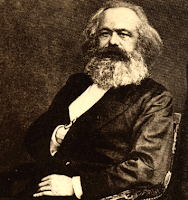
In an oft-quoted nugget of wisdom from Marx, we are told: “Masturbation is to sex as philosophy is to reality.”

This observation or witticism sticks out to me as I read and re-read parts of The Captive. For our purposes here, I am only going to deal with the first twenty pages of the volume – in time, more entries will appear – but for the time being let us begin here. (Incidentally, I feel as though I am writing an article in bits and pieces and perhaps should, in an oh-so-typical academic move, surrender to silence and hide these ideas until they have been published in some reputable journal.)

I am struck by the insistence throughout these pages of the polemicising of reality and how we are to interpret reality.

His mistake was, however, perfectly excusable, for reality, even though it is necessary, is not always foreseeable as a whole. People who learn some correct detail about another person’s life at once draw conclusions from it which are not accurate, and see in the newly discovered fact an explanation of things that have no connexion whatsoever. (IV.2)

It does not seem that Marcel is denying “reality,” but rather he is noting that reality and perceptions of it are necessarily flawed. Many have noted previously the phenomenological tones intrinsic to the novel and this very much seems like one of those instances. In his book, Narrative Perspective in Fiction: A Phenomenological Mediation of Reader, Text, and World (1991), Daniel Frank Chamberlain writes:

What is available is the object selected as a foreground from the background and the particular facets of that foreground facing the perceiver at a particular moment. […] No object is totally available to our senses from any one standpoint. There are always aspects hidden from our senses. (37)

Indeed, this very much seems to be the case for Marcel; however, it is additionally important to note that for Marcel this recognition of the impossibility of perceiving everything is thus a questioning of reality. If I am unable to fully understand that which I see, how then do I deal with reality? For our purposes, if I clasp to one aspect of Marcel’s identity, am I guilty of this same charge of having only one correct detail and thus extrapolating it to the totality of Marcel? Of course, only a page or two later, Marcel allows for the possibility of a single, unified self: “when all my other ‘selves’ are dead” (IV.5).

Though we have not yet seen the essay on inversion, moments of inversion are already happening:

So true it is that life when it chooses to deliver us once more from suffering that seemed inescapable, dose so in different, at times diametrically opposed conditions, so much so that it seems almost sacrilegious to note the identical nature of the consolations vouchsafed! (IV.2)

Here then, we have this sort of pre-recognition of the poetics of inversion that will overwhelm the reader in Sodom and Gomorrah and if one is not convinced by this poetics of inversion being present, Marcel reaffirms it when he speaks of Gomorrah:

In leaving Balbec, I had imagined that I was leaving Gomorrah, plucking Albertine from it; in reality, alas, Gomorrah was disseminated all over the world. (IV.20)

I cannot help but imagine the punning potential of this sentence; however, the point being that Gomorrah as defined to a specific space is later defined as being “all over the world” and thus no longer established in one location.

Thus, I return to the witticism that opened this posting: Masturbation is to sex as philosophy is to reality.” In Proust’s work, at least in the framework of these twenty pages, reality is clouded, made ambiguous, confused. In many regards, reality is like the bathroom window:

The windows of our respective bathrooms, so that their occupants might not be visible from without, were not smooth and transparent but crinkled with an artificial and old-fashioned hoar-frost. All of a sudden, the sun would colour this muslin glass, gild it, and, gently disclosing in my person an earlier young man whom habit had long concealed, would intoxicate me with memories, as though I were in the heart of the country amidst golden foliage in which even a bird was not lacking. (IV.3)

This private space – a bathroom in the country – is not new to readers. Indeed this very space is the masturbatory space that opened In Search of Lost Time:

I ran up to the top of the house to cry by myself in a little room beside the schoolroom and beneath the roof, which smelt of orris-root and was scented also by wild currant-bush which had climbed up between the stones of the outer wall and thrust a flowering branch in through the half-opened window. Intended for a more special and baser use, this room, from which, in the daytime, I could see as far as the keep of Roussainville-le-Pin, was for a long time my place of refuge, doubtless because it was the only room whose door I was allowed to lock, whenever my occupation was such as required an inviolable solitude: reading or day-dreaming, tears or sensual pleasure. (I.14)

While from this room Marcel is able to clearly locate a distant image, in the current room the window clutters and makes ambiguous reality. However, to be taken from this, I imagine, is that in both spaces the solitary pleasures of the imagination can and are to be found. But, in this regard, if reality is blurred so to then sex must be blurred and made ambiguous. And if this is the case, as I argue it is, what then are we to do with the Captive, Albertine? Or, perhaps, is it Marcel who is held captive to his imagination, his fears, his anxieties. In other words, let me turn, once again, to Marcel:

But such a phobia is capable of assuming as many forms as the undefined evil that is its cause. […] But the slightest pretext serves to revive a chronic disease, just as the slightest opportunity may enable the vice of the person who is the cause of our jealousy to be practiced anew (after a lull of chastity) with different people. (IV.18)

In many regards, this “phobia” which allows for a return to the “undefined evil” or the “chronic disease” is like the “misplacing of [his] thigh” (I.3) which is like “the slightest pretext” that returns him to a practice (after a lull of chastity). Thus, what is more real in The Captive: sex or masturbation?

J.A.

Images: Marx Portrait; Onanie (1911) by Michael von Zichy


Sunday, May 16, 2010

Marcel's Dreams

Marcel tells us at the beginning of Swann’s Way about his trouble falling asleep, dreams, day-dreaming, and the “room of one’s own”. To these ends, I want to write here about a particular paragraph to further my previous post:

Sometimes, too, as Eve was created from a rib of Adam, a woman would be born during my sleep from some misplacing of my thigh. Conceived from the pleasure I was on the point of enjoying, she it was, I imagined, who offered me that pleasure. My body, conscious that its own warmth was permeating hers, would strive to become one with her, and I would awake. The rest of humanity seemed very remote in comparison with this woman whose company I had left but a moment ago; my cheek was still warm from her kiss, my body ached beneath the weight of hers. If, as would sometimes happen, in waking hours, I would abandon myself altogether to this end: to find her again, like people who set out on a journey to see with their eyes some city of their desire, and imagine that one can taste in reality what has charmed one’s fancy. And then, gradually, the memory of her would fade away, I had forgotten the girl of my dream. (I.3)

This is a very confessional moment and a very early moment in the novel, so, what does the reader do with this? It seems at the very least here that Proust is negotiating the difference between masturbation and nocturnal emission. We are dealing with an adolescent who, as Carter notes, “felt isolated and misunderstood” (4) and yet, I would contend that there is a doubling problem here about the nature of arousal and the erotic. What, if any, is the difference between the masturbator and the sleeper? Or, what is the difference between a day-dream and a wet-dream? Read closely, the “wet-dream” is facilitated by the misplaced thigh that allows for him to imagine a woman “who offered [him] that pleasure” (I.3). Everything here is taking place in slumber – the sleeping male is like Adam. We have a description, so to speak, of coitus: “my body ached beneath the weight of hers” (I.3) and then, suddenly, an awakening, and a subsequent search for this woman: “I would abandon myself altogether to this end, to find her again” (I.3). The question of desire is available to readers in both and yet it would seem that the initial dream scene lacks the agency (will) of the latter dream scene. Indeed, Marcel speaks to this very problem – a problem as old as the Church Fathers – when he says: “Alas! I did not realise that my own lack of willpower, my delicate health, and the consequent uncertainty…” (I.14), he continues to note that it weighed heavily on his grandmother’s mind – in reality, it weighed heavily on his parents’ minds. In a letter to Bizet he writes that his mother feared the two boys might share “the same faults . . . independent spirit, nervousness, a disordered mind, and perhaps even masturbation” (Carter 4). The concern is that masturbation causes all sorts of maladies, and if there is one thing we know from Proust’s life and masterwork, illness and sickness overwhelm the pages.

If this novel opens with masturbation and the privacy of a room of one’s own, why can we not presume that this trope runs wild throughout the duration of the novel? Could we read this novel structurally to show that it has an “orgasm principle and cycle” that very much mimics the masturbatory/sexual/erotic experiences of Marcel?

J.A.


Saturday, May 15, 2010

A Room of Proust's Own, Another Perspective


Natalie writes: “If Proust is anything like his alter ego Marcel, and I suspect that he is, he most definitely valued the privacy and solitude offered to him by his bedroom.”

Indeed, I think it is fair to say that Marcel did enjoy the privacy and solitude afforded to him by his bedroom; however, there is much more to be said about the bedroom and Marcel’s writings, identity, and privacy. The bedroom affords Marcel the ultimate locus to explore desire and still enjoy the comfort of the closet. I want to provide here a much closer reading of the bedroom than perhaps previously considered and I should forewarn here that parts of this are coming from dissertation writing (I should, perhaps, provide its title: “The Sexual Scripture: A Study of Virginity in Romance”), so apologies in advance if an argument seems undeveloped here or unexplained (it likely was dealt with earlier in the dissertation).

In the final volume of Proust’s novel, Gilberte explains her own sexual awakenings and recognition of her sexual identity,

“The first time at Tansonville. You were going for a walk with your family, and I was on my way home. I’d never seen such a pretty little boy. I was in the habit,” she went on with a vaguely bashful air, “of going to play with little boys I knew in the ruins of the keep of Roussainville. And you will tell me that I was a very naughty girl, for there were girls and boys there of all sorts who took advantage of the darkness. The altar-boy from Combray church, Théodore, who, I must admit was very nice indeed (goodness, how handsome he was!) and who has become quite ugly (he’s the chemist now at Méséglise), used to amuse himself with all the peasant girls of the district. As I was allowed to go out by myself, whenever I was able to get away, I used to rush over there. I can’t tell you how I longed for you to come there too; I remember quite well that, as I had only a moment in which to make you understand what I wanted, at the risk of being seen by your people and mine, I signalled to you so vulgarly that I’m ashamed of it to this day. But you stared at me so crossly that I saw that you didn’t want to.” (VI: 4-5)

This quotation recognises the very discourse of virginity that runs alongside the epistemology of the closet because it is a revealing of oneself to another and moreover that this “coming out,” is very much a “sexual” coming out. In the case of Gilberte the references to her virginity or virginal nature are manifested in the language of “the first time” which is aligned with virginity and later her discussion of having gained sexual knowledge at Roussainville. These indications are coupled with a past tense that recalls a “lost time,” a “virginal time.” It is interesting to note here that,

The tower of Roussainville is indeed phallic, not only because the protagonist gazes at it from the window while masturbating and yearning for a girl but also because years later he learns that the two had been the scene of sexual experimentations by young people of the village and that what he had mistaken for Gilberte’s obscene gesture of repulsion on first seeing him had in fact been intended as an invitation to join her in the games at the tower. (Carter 5-6)

This site then becomes, in many regards, the door out of the virginal closet; had Marcel realised what Gilberte desired, he would have been able to lose his virginity instead of being a chronic masturbator and a perpetually anxious virgin.

Proust’s room, Marcel’s room is the locus of pleasure for the chronic masturbator. There is a lot of masturbation in In Search of Lost Time – lost time indeed! – and our earliest masturbatory instance occurs in the very opening pages of Swann’s Way: “it was the only room whose door I was allowed to lock, whenever my occupation was such as required an inviolable solitude: reading or day-dreaming, tears of sensual pleasure” (I:14). Incidentally, if we return to the opening line of Swann’s Way: “For a long time I would go to bed early” – the question in the reader’s mind becomes: why is he going to bed early, to read or to “day-dream”? It is interesting to note, however, that it is only within the framework of In Search of Lost Time that his bedroom offers “inviolable solitude,” for in real life, we are told in a letter by Proust: “This morning, dearest, when my father saw me . . . he begged me to stop masturbating for at least four days” (Carter 4). In his book, Proust in Love, William C. Carter provides a brief overview and discussion of masturbation and Proust; however, I want to take this a bit further in relation to our discussions of indulgence, writing, and reading.

We have acknowledged that writing can be a labour; however, what if we read this less in terms of labour and more in terms of pleasure. Proust alludes to this possibility when he speaks of the bedroom affording a place to read and to “day-dream,” but what if we also, in this bedroom, position writing alongside reading and “day-dreaming”? What if these three notions all fold into one another? Is Proust’s masterpiece really the longest of masturbatory exploration of the various desires that the narrator considers in the privacy of his writing and reading space?

J.A.